English Deutsch Espanol Francais Italiano Portugues Russian Arabic Japanese Korean Simplified Chinese


Jul 23, 2009

OnStar Pushing 'Car Chase' Avoidance

Call it factory LoJack: OnStar has unveiled OnStar Ignition Block, a feature that lets law enforcement disable a car's ignition once it has been stolen. The idea is to avoid dangerous car chases that could put the public, the police, or the thief at risk.

In addition, OnStar claims it already works with law enforcement to attempt recovery of about 600 stolen vehicles per month using the service's embedded GPS chip. OnStar also helps slow down cars that are involved in chases--against the will of the thief.

The new Ignition Block capability is available on selected 2009 and 2010 GM vehicles equipped with OnStar, and will build on the company's Stolen Vehicle Assistance services already in effect.

Technology Update: Daily Updates on newly launched Gadgets, Gizmos, Mobiles, PC's & Laptops, Hacking, Gaming & Emerging Technological Trends.

Jul 14, 2009

ProClip USA releases device holders

ProClip USA has recently announced a bunch of device holders which were specially designed to securely mount the recently released iPhone 3G S to car, truck and SUV dashboards alongside consoles. These were specially custom made to connect to vehicle-specific ProClip dashboard mounts, giving superior viewing and easier access. Of course, you can always attach the ProClip holders to other flat surfaces. Below are the new products available for your perusal.

The Padded Holder with Tilt Swivel is custom made with a neat and discreet design. It tilts 15 degrees in any direction for optimal viewing. Your iPhone 3G S easily slides in and out of the holder.

The Padded Holder with Tilt Swivel and Charging/USB Cable has a cable permanently attached to the base so when your device is slid into the holder it connects to the cable. Then the cable can either be plugged into your car’s 12V power outlet or any female USB connection. You can easily slide your iPhone in and out of the holder. The Holder angles 15 degrees for optimal viewing.

The Holder with Tilt Swivel and Pass-Through Connector will make docking and undocking, your iPhone 3G S, easier and more convenient. Attach your stereo cable, charging cable or any other iPhone compatible cable, to the bottom of the holder, to create a docking station. Your iPhone 3G S is conveniently on the dash within easy reach and slides in and out of the holder with one hand. The holder is custom made with a neat and discreet design and tilts 15 degrees, in any direction, for optimal viewing.

The Adjustable Holder with Tilt Swivel and Pass-Through Connector has all the benefits of the above Holder with Tilt Swivel and Pass-Through Connector plus it is designed to accommodate your encased iPhone 3G S. This Adjustable Holder will adjust from a width of 2.3″ (60mm) to 3.2″ (82mm).

The ProClip Vehicle Mount provides the mounting platform to attach any of the ProClip holders. The ProClip Vehicle Mount is the only vehicle specific, consumer installable mounting bracket in today’s global market. The mount clips into the dashboard seams, providing a very sturdy and tight fit. Average installation time is 2 minutes. No dismantling of the dashboard is required and there is no damage to the vehicle’s interior!

Guess there is a little bit of something for everyone, unless you don’t own a vehicle, of course, then you’ll just need to stash your iPhone 3G S into your pocket while you get about on public transport.

Press Release

Technology Update: Daily Updates on newly launched Gadgets, Gizmos, Mobiles, PC's & Laptops, Hacking, Gaming & Emerging Technological Trends.

Jun 29, 2009

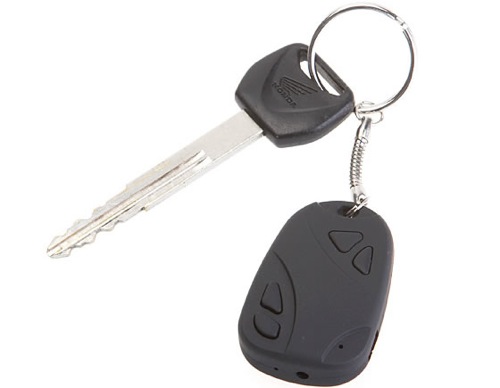
Car Key Security Spy Camera

If you thought that the keychain spy camera wasn’t quite stealthy enough, this car key might work a little bit better. Just close up the key part and it would cover up all of the spots that let on that it’s actually a spy camera in disguise. Closing up the key won’t obstruct the view of the camera itself though. There’s just a small hole at the bottom of the plastic part, that no one would ever suspect is a camera.

This fake key comes from Brando just like the keychain. It’s also extremely similar, the biggest difference is that they are two different shapes. This fake key has 2GB of built-in memory and can shoot at 29 FPS. The color video resolution is at 640 x 480 and then the image resolution is 1280 x 960 pixels. It has video as well as audio and a rechargeable Li-ion battery. You can purchase it for $66 from Brando, which happens to be the exact same price as the keychain. So you can pick and choose which look you like the best and not have to worry about price differences.

Technology Update: Daily Updates on newly launched Gadgets, Gizmos, Mobiles, PC's & Laptops, Hacking, Gaming & Emerging Technological Trends.

Jun 26, 2009

Mercedes-Benz Coffee Alarm

The new E-class features quite a few cutting-edge driver aid gadgets, such as night vision, blind-spot detection, and adaptive cruise control. We saw these features previously in the Mercedes-Benz S550, but the E-class will also include Attention Assist, a new feature for Mercedes-Benz that keeps you from falling asleep at the wheel.

Attention Assist monitors the car's driver, using 70 parameters to determine if he or she is dozing off. If it detects a drowsy driver, the system sounds a warning tone and lights up a coffee cup icon on the speedometer display. The system relies heavily on monitoring steering-wheel input, as a tired driver will drift, then make sharp corrections.

Volvo launched a similar feature last year in the S80, complete with coffee cup icon. During our testing of that car, we tried our hardest to make it think we were falling asleep.

We predict the next generation of this technology won't bother with the warning part, instead automatically driving the car to the next rest stop and letting you nap.

Technology Update: Daily Updates on newly launched Gadgets, Gizmos, Mobiles, PC's & Laptops, Hacking, Gaming & Emerging Technological Trends.

Jun 25, 2009

Attention Assistance for Sleepy Drivers

On the Volvo S80 is a new safety feature that I have never seen before, but I’m guessing it is probably needed. Attention Assist has an interesting feature that can detect whether the driver is nodding off, which is a cause of many an accident.

The Mercedes-Benz S500 as well as the new E-class of the model have this Attention Assist safety feature, which uses seventy parameters that signal to the car that the driver is drifting into slumberland. Granted, I have no idea why seventy is needed, because I believe that the only possible indicator would be on the steering wheel.

In fact, how can a car tell when you are nodding off? Maybe they have a “power nod” detector that I don’t know about. If you’re not familiar with the “power nod”, just think back to college when that boring professor put you to sleep, but you tried to stop yourself. The end result was classmates in the back shouting “whiplash”!

If the car does detect your drowsiness, the indicator light will come out. Oddly enough, a picture of a cup of coffee appears on the dash. So what is this, some sort of signal that you need caffeine? If so, I would prefer having a Mountain Dew can in there in lieu of the coffee cup. I’m not a big coffee achiever guy.

Now, if the car has a GPS, it could give the driver directions to the next coffee shop. For me, there would have to be some compass pointing to the nearest Mountain Dew machine.

Source

Technology Update: Daily Updates on newly launched Gadgets, Gizmos, Mobiles, PC's & Laptops, Hacking, Gaming & Emerging Technological Trends.

Jun 24, 2009

Flying car to be unveiled in 2011


An American company Terrafugia Transition, based near Boston, is set to unveil the dual-purpose car-cum-plane vehicle called 'The Flying Car' as early as 2011. The two-seater vehicle can let you fly if you wish to avoid the congested city traffic.

If you want to drive on the road, just touch the road. The vehicle will fold up its wings in 30 seconds and transform itself into a car.

"The Flying Car" can travel up to 725 kilometres in the air at a speed of more than 115 kilometres per hour.


Fuelled by gasoline, it has front wheel drive on the road and a propeller for flight.

With its wings folded, it can be parked in your ordinary car garage.

Its initial cost is expected to be around $200,000 (nearly Rs.1 crore), says the company which has already orders for 60 vehicles.

The CEO of the company told Canadian TV (CTV) network here that they have successfully test-flown "The Flying Car" as many as 28 times.

The tests have shown that the vehicle can drive, fly and switch from being a plane to a car in just 30 seconds.

"It (testing) has been very successful," Carl Dietrich, co-founder and CEO of Terrafugia, told the television network.

" We have got a very good handling vehicle and our test pilot said that the flights were just remarkably unremarkable - it just flies like a really nice, little airplane,” he said.

He said this miracle vehicle will ease problems for pilots who currently face problems like weather which sometimes doesn't allow them to take off or land.

"This vehicle allows a pilot any time, if the weather changes, to divert to the nearest airport, fold up their wings and drive safely under the weather."


"The Transition (the name for "The Flying Car" is not designed to replace the automobile. However, it will solve transportation issues for a variety of circumstances,” company vice president Richard Gersh said.

Asked whether the vehicle will be mass produced one day, he said: "That is certainly a possibility, but a number of years away."

He said the vehicle will be able travel on ordinary roads.

"Our depositors represent a wide-cross section in terms of age, interests, and intended use of the vehicle. We have deposits from both experienced pilots and non-pilots who intend to earn their Sport Pilot certificate," said the vice president of Terrafugia.

Set up in 2006, Terrafugia is run by trained aeronautical engineers and MBAs from the Massachusetts Institute of Technology (MIT).

Technology Update: Daily Updates on newly launched Gadgets, Gizmos, Mobiles, PC's & Laptops, Hacking, Gaming & Emerging Technological Trends.

Jun 22, 2009

Keyring Alcohol Breath Tester

There is nothing quite like painting the town red to celebrate a joyous occassion like a marriage or promotion on the job, but drinking responsibly is another important thing to consider even if you decide to let your hair down. For folks who do not trust cabbies to bring them back in one piece after a hard night of partying, there’s always the Keyring Alcohol Breath Tester that allows you to know whether you need a friend to bring you back or not.

Just hold down the power button until the LED turns green and blow across the top of the grill. If the light remains green, then you’re under 0.05% BAC, and in theory in the clear. If the yellow LED comes to life, then you need to use caution (and probably a bus) as it means you’re hovering dangerously close to the legal alcohol limit of 0.08% BAC. If the red and yellow LEDs come on, then you should throw your car keys into the nearest river and start weaving your way home as you’ve had far too much to drink.

Of course, if you can’t even remember where you’ve parked your car, then there isn’t even any need to purchase this £7.99 device.

Technology Update: Daily Updates on newly launched Gadgets, Gizmos, Mobiles, PC's & Laptops, Hacking, Gaming & Emerging Technological Trends.

Jun 9, 2009

BMW Voice Control Simplifies Navigation

Imagine being able to tell your car where you want to go in a few words, or pick out your music without taking your eyes off the road. That's what BMW promises this fall with its new voice control system. BMW (and the rest of the car world) is playing catch-up with Ford's Sync system. It's possible BMW has passed Ford on the navigation side; some of the new BMW audio input controls still seem stunted and cumbersome, at least based on what BMW is disclosing now. It's available on 2009 BMWs worldwide, the company says.

BMW calls it a "truly innovative, cutting-edge technology for voice control" because a single voice command lets you give your car the entire address. In BMW's example, after you've started the voice command by pressing a button on the steering wheel and then after you've summoned up the navigation module, you say something as simple as, "Berlin, Willy-Brandt-Strasse 1", and you go straight to the Federal Chancellery. Assuming you're not in Boston at the time.

That's on top of BMW's ability to send map information from Google Maps to your car. Mercedes- Benz also has a send-to-car feature. It's a nice way to preload a bunch of vacation destinations and can also be helpful if your rich but technically inept brother-in-law can't make navigation work in his new 7 Series; you can do it for him.

BMW Bypasses the Navigation Song-and-Dance

Most cars drive you crazy with a bunch of questions about the destination you want or the music you want to hear. Usually it's mind-numbingly slow and makes you fall back to the touchpad and control wheel when you have to do this:

Car: "[Ding] Please say a command." You: "Navigation" Car: "Please say a state." You: "Colorado." Car: "Please say a city." You: "Denver." Car: "Please say a street." You: "Colfax Avenue" And so forth. Why does this happen? There are two problems. First, the car can only digest so much information at a time, and often the twenty-questions routine is the car's way of stalling for time as it loads the navigation module, then the Colorado city list, then the Denver street list, and so forth. The second is that most cars aren't multi-modal, a fancy way of saying the underpowered, supplied by the lowest bidder module, doesn't have the ability to think about music, navigation, and climate control all at one time, so you have to jump among modules.

Ford Sync in its initial version suffered this problem; Ford says it's getting better with new models.

Thirty Seconds to Summon Duffy?

BMW says the music input feature is way cool, too, and a blessing to the easily distracted driver. BMW says the feature works first with music files on the car's hard disk drive, followed by the ability to function with iPods and other music players come spring 2010. It will also work side-by-side with the iDrive controller; now, if you interrupt a voice command by using the controller, voice entry ends.

Here's an example BMW offers up. You decide how cool this really is:

You: [Press voice button on wheel.] BMW: [Ding] You: "Music search." BMW voice control: "Music search. Please name a menu item or say start playback." You: "Select artist." BMW: "Please say an artist." You: "Duffy." BMW: "Duffy. Please name a menu item or say 'start playback.'" You: "Select a title." BMW: "Please say a title." You: "Mercy." BMW: "Mercy. [Ding. Duffy sings.]"
This little back and forth in BMW's demo ran almost 30 seconds, a pretty long chunk of time even for a must-listen, sexually charged song that runs three minutes, 40 seconds. BMW can only hope that the new voice control does for buyers what Duffy proclaims:

I don't know what you do.
But you do it well.
I'm under your spell.

The other possibility is that it's still slow and, in Duffy's words, "You got me begging for mercy." What drivers want is a microprocessor fast enough and track-and-title storage big enough that you can press the button and say, "Play Duffy - Mercy." And the car would figure out that "play" has to do with the entertainment system while "take me to" or "destination ... " would be the cue that you want to interface with navigation. It then figures out if Duffy is an artist or track name. You figured it out; why can't the car?

In such a system, there might be conflict, such as the artist Duffy and a track from another artist called The Ballad of the Duffy Clan. Through disambiguation, the car could ask what you want, or it could notice Duffy the artist has been played a bunch of times in the last month, but not the Ballad of Duffy.

Sounds as if BMW is moving forwarding and cementing its reputation as the highest of the high-tech automakers. Whether fullest ease-of-use takes a back seat remains to be seen. Recall that BMW engineers spent seven years high-fiving each other for inventing iDrive in 2001-2002 and only belatedly recognized (with 2009 models) that it was a bit harder to use than they thought. iDrive is now the easiest cockpit controller to use (along with the Lexus Remote Touch), but it took them a while.

Techno Uptodate: Daily Updates on newly launched Gadgets, Gizmos, Mobiles, PC's & Laptops, Hacking, Gaming & Emerging Technological Trends.

Jun 2, 2009

Belkin TuneBase Brings In-Car iPhone Goodness

Belkin has launched two new products, called TuneBase FM and TuneBase Direct, that let iPhone owners make and receive hands-free calls or listen to music while in the car. The two units play iTunes tracks over the car's stereo speakers--and then fade the music out whenever a call comes in, which is also routed through the stereo. In addition, both TuneBase products can be used while the iPhone is still in its cradle. Both units also support landscape and portrait orientation for turn-by-turn directions or videos.

TuneBase Direct connects to your newer car stereo's auxiliary input using a 3.5mm cable, and also charges your iPhone so the battery doesn't run out. TuneBase FM goes the old-fashioned FM transmitter route, which usually sounds like crap and is subject to interference in cities with lots of radio stations. It also charges the iPhone, and has a ClearScan feature for finding the clearest FM signal to use for music transmission. TuneBase Direct will be available in the next few weeks for $69.99 including a 3.5mm cable, while TuneBase FM will drop in July for $89.99.

Jun 1, 2009

Ford Sync 3.0 Changes the Car Business

The new version of Ford Sync, introduced this week at CES, isn't just better Bluetooth and audio. It also represents a cheaper way to get navigation and driving information in your car. And most of all, it's part of the car technology revolution where electronics trumps mechanical components.

Ford CEO Alan Mulally introduced Sync 3.0 with Traffic, Directions and Information in a keynote speech at the Consumer Electronics Show yesterday. Sync will include an offboard navigation system that connects to your car via your Sync-connected Bluetooth cellphone and voice (or dashboard) inputs. You request trip directions from a Sync server, it downloads turn-by-turn information, and you navigate via text prompts (no moving map) on the radio display.

There's also traffic information sent to your cellphone as text messages that can be read aloud by Sync, and the ability to get business information, weather, and sports scores. All this comes free for the first three years of ownership, after which there's a monthly service charge that Ford says it hasn't determined yet, or more likely just doesn't want to discuss. Figure $10-$15 a month.


Why Sync Changes the Car Businesses
GM was the first with a telematics package among U.S. automakers: OnStar. OnStar is free for a year, then you pay $200 a a year for crash notification,roadside assistance, and remote door unlock (Safe & Sound package) or $200 a year for rudimentary navigation similar to what Sync 3.0 will offer (Directions & Connections). The most popular option, however, appears to be to let OnStar services lapse (cost: $0 a year) after the first freebie year, meaning millions of GM cars are riding around with disabled safety services. Rather than build a cellphone into each car as GM does, Sync works with what you bring into the car with your: your iPod for music and your cellphone for calling.

Each new version of Sync leverages the cellphone even more. The first version, announced two years ago, provided hands-free calling. The second version added 911 Assist (crash notification) and Vehicle Health Report (online status of the car's systems); some people count this as more of a 1.1 version. The coming version adds the navigation, traffic information, and business search (yellow page listings), plus business news, sports scores, and weather information (sort of like what a car radio provides, only when you want it). You can issue voice commands such as "traffic to work" to receive, within the still-limited abilities of real time traffic information, information on delays.

While you can't upgrade a car that has the first or second version of Sync to get Sync 3 services, Ford says future services will be downloadable upgrades--although Ford's wording doesn't say that every future feature of Sync would work on Sync 3 hardware. That's important to users who see years-old technology that's locked into their cars without any chance of upgrade; it's most noticeable if you're driving a five-year-old-car with laughably rudimentary navigation that cost $2,000-plus and an iPod adapter that's just a line-in jack. Ford, through Sync, recognizes that automakers must work with the individual technology you have in your backpack or jacket pocket. And the downloadable-upgrades feature acknowledges the need to adapt as technology moves forward--not just when you buy your next new car.

Which Fords get Sync
The new Sync platform is on these 2010 model cars: Ford Focus, Fusion, Flex, Expedition, F150, SuperDuty, Sport-Trac, Edge, Escape, Explorer, Mustang, and Taurus; Mercury Milan, Mariner, and Mountaineer; and Lincoln MKS, MKX, MKZ, and Navigator. Some models such as the Ford Fusion / Mercury Milan twins, including the 40-plus mpg Ford Fusion hybrid, will be available as early as late winter. Because it's a new hardware package, the features set can't be retrofitted to existing Sync-package cars. Ford will still offer real navigation systems as well, shifting from Pioneer to Xanavi on most vehicles, for users who a big LCD and moving-map display.

Already Sync is helping keep Ford afloat. Ford's CEO Mulally noted that cars equipped with Sync sell twice as fast off dealer showrooms as Fords without Sync. Sync is integrated into the cost of upper- and mid-range Fords, Lincolns, and Mercurys. It's a $395 option on some mid-range and entry models, and not available on some of the most bare-bones entry models.

Sync is Ford's version of Microsoft's in-car telematics services. Fiat was the first to use it, in a 2006 package called Blue & Me, and Ford announced Sync in 2007. For the third version of Sync, partners include Microsoft, Inrix (a Microsoft spinoff) for real-time traffic information, TeleNav for navigation, Tellme (a Microsoft subsidiary) for voice services, M/A-COM for hardware components, and Airbiquity for car-to-phone connections.

What Sync 3.0 Isn't
Much as Sync offers, Ford has left some openings:

* Real navigation. Turn-by-turn with text prompts and spoken words is better than nothing, but it doesn't address the need for affordable navigation with moving maps. Most onboard navigation still costs $1,750 to $2,000, and the cheapest, from Hyundai, is $1,250. What's missing, obviously, is moving-map navigation that costs less than $500. If Garmin, TomTom, Magellan, Navigon, Sony, and others can do it for as little as $99 (as of the holiday time period) in portable navigation devices, why is integrated car navigation an order of magnitude costlier?
* Redirected cellphone navigation. Another option for quality navigation would be to redirect cellphone navigation, which typically costs $10 a month and may soon reach $5 a month, to an already integrated LCD on your dashboard. That level of openness isn't yet in Ford's plan, apparently.
* Real-time traffic that works. Nothing against Ford's partners, but even the best real-time traffic misses a lot of traffic in real time. You get advised of hour-long delays, but you miss a lot of accidents that slow traffic by, say, 15 minutes--just enough to make you miss your appointment. It will get better, but over years, not within months. Think of RTTI as gossip backed by statistics that's right more often than not, but never 100% believable.
* Secure Mayday calling. OnStar builds its cellphone into a secure location, usually the trunk, and it's likely to survive severe crashes, where an unsecured mobile phone used by Sync may fly around the car and not work after the crash. Also, an OnStar antenna has better range than a handheld phone's built-in antenna. But there's little or no data about the vulnerability of mobile phones in accidents. And when there is, the data should be correlated to the fraction of OnStar cars that are paying for the service. Example: OnStar phones may work 99% of the time in crashes, but only 50% of cars have OnStar service enabled after year one; but Sync-connected phones may work 90% of the time after crashes, and 75% of the phones are turned on and paired with Sync. So there could be two answers as to which phone saves more lives, assuming a passing motorist doesn't call 911 as well. For Ford, an interim solution might be a padded cradle and elastic strap in the console along with a charging plug.
* More powerful Sync hardware. The first two versions of Sync wowed customers, but the limited processing power was annoying. You had to work through a voice input menu tree--so for instance, when you were in navigation mode, you had to invoke the audio mode before issuing an audio command. Otherwise, "Play artist Lady GaGa" had no effect. For most users, it meant using the radio buttons rather than the voice prompts.
* Video. The Sync USB jack provides connections to 200 million music players, iPods as well as most other brands, and billions of USB drives that can hold MP3 or WMA songs. But so far there's no way to play all the movies you have on your iPod, either on a back-seat monitor or on a front-seat LCD screen that's polarized so only the passenger could see the entertainment.

Back to the Future
While Sync 3.0 provides new services for the U.S. market, it's also playing catch-up to Fiat's Blue & Me, which has offered navigation with its early releases. The initial Microsoft product, called T-Box internally (T for telematics) used voice input and offboard navigation, much as Ford will now use.

But Fiat's implementation chose to use a 2GB memory key with onboard address and navigation information, an intriguing choice since Europe's cellphone infrastructure is better than ours and has far fewer dead zones. When I asked Ford executives two years ago why they weren't matching Fiat's offering of navigation, Ford's answers were a combination of "wait and see" and "the U.S. market isn't ready for rudimentary navigation." In other words, the kind of navigation the U.S. market will be getting with Sync 3.0.

Sync 3.0 also represents a reputation resurrection of sorts for Ford's CEO from 1991 to 2001, Jacques Nassar, who talked about the car as a recurring revenue stream from telematics and infotainment devices and led Ford's into an ill-fated alliance with Qualcomm from 2000 to 2002, called Wingcast. It's back. Whether it's ever a meaningful revenue stream remains to be seen.

Ford Says SYNC 3.0 Available for Download

Ford announced that its next-generation SYNC 3.0 application with traffic, directions, and information (TDI) is now available for early-launch 2010 Ford Mustang, Fusion, Fusion Hybrid, Lincoln MKZ, Mercury Milan, and Milan Hybrid vehicles.

TeleNav, the company behind AT&T and Sprint cell phone GPS navigation (and now a standalone unit), is powering the traffic system in Ford TDI. TeleNav PR manager Mary Beth Lowell said in a blog post that the new version of SYNC will offer personalized traffic reports, precise turn-by-turn driving directions, and up-to-date business listings, news, sports and weather information. Traffic conditions will also influence turn-by-turn directions--meaning that owners may hear different routes for the same trip at different times or on different days.

Ford SYNC lets drivers of equipped cars connect their cell phones viaBluetooth and control their in-car entertainment and navigation systemwith voice commands. Current owners of the aforementioned vehicles can visit www.syncmyride.com to download and install the latest application at home at no cost.

AND HOW IT WORKS SEE THE NEXT POST

May 30, 2009

Keychain Car Key Security Spy Camera

spycam-carkey

Remotes to go with your car are so incredibly common that no one would notice anything odd about this keychain. It’d just look like your average keychain unless someone actually bothered to inspect it closely. Odds are, no one is all that observant, nor do they have any need to be. Well if you’re just dying to catch someone doing something shameful, this keychain can help you catch them in the act.

It can take both video, audio and pictures, all depending on what you need at that particular moment. They’ll never know that you just captured proof of them up to no good until it’s too late. That is unless you’re entirely too obvious by the way you’re holding the keys. Asking them to speak into the keychain might be a touch too obvious. It has a rechargeable Li-on battery and 2GB of built-in memory. It can do 29 FPS, 1280 x 960 image resolution and 640 x 480 color video resolution. You can purchase the keychain for $66 from Brando.

Oct 3, 2008

Car Engine Performance Monitor Chip


Take a look at your car’s dashboard and chances are you won’t be able to garner anything more than the basics, including speed, fuel, odometer, and engine temperature. For those who thrive on numbers, figures and schematics, that’s just not enough, which is where the Car Chip Pro Engine Performance Monitor comes in handy.

Just plug Car Chip Pro into the OBDII port (easily found under the dashboard or steering wheel) and it reads and stores data from your car’s on-board computers, continuously logging driving and engine performance. On-board diagnostics (OBD) data was once available only to professional mechanics. With Car Chip Pro, this same data is now in your hands. The data logger will start collecting data as soon as you start driving. Connect the Car Chip to your computer via USB and download the data.

Too bad the Car Chip Pro Engine Performance Monitor works with Windows platforms only, so that rules out Mac and Linux petrol heads. You can pick up this geeky device for $119.99.

Archive